Back to Blogs

Do You Need Dental Bonding? Signs to Watch For

Dental bonding effectively repairs chipped or cracked teeth, closes small gaps, and masks discoloration, offering a quick, minimally invasive solution for cosmetic and structural dental issues.

September 29, 2026
•
2 min read
Allison sips water from a glass with a wince, touching her front tooth, while seated at a wooden table with a book and coaster in a dimly lit room with lamps.
Back to Blogs

Do You Need Dental Bonding? Signs to Watch For

Allison sips water from a glass with a wince, touching her front tooth, while seated at a wooden table with a book and coaster in a dimly lit room with lamps.

Dental bonding effectively repairs chipped or cracked teeth, closes small gaps, and masks discoloration, offering a quick, minimally invasive solution for cosmetic and structural dental issues.

September 29, 2026
•
2 min read

Understanding Dental Bonding

Dental bonding offers a versatile solution for minor cosmetic and structural dental concerns, restoring both function and aesthetics. It involves applying a tooth-colored composite resin to the tooth, which is then sculpted and hardened with a special light. This process effectively conceals imperfections and strengthens compromised teeth, often completed in a single visit.

Dr. Taylor Schaar frequently uses dental bonding to help patients achieve a more uniform and radiant smile.

Allison, a woman in her early thirties, recently noticed a small chip on one of her front teeth. She worried about its appearance and whether it indicated a deeper problem. Her goal was to find a discreet yet effective solution that wouldn't involve extensive procedures.

Allison sits on a sunny balcony, wearing a light sweater, touching her lower lip with her finger, looking concerned, with a cup of tea on a small wooden table beside her.

What Is Dental Bonding?

Dental bonding is a popular cosmetic procedure where Dr. Taylor Schaar meticulously applies a durable, tooth-colored resin material to a tooth. He then sculpts it into shape, smooths it, and hardens it with a specialized curing light. This process creates a seamless restoration that blends naturally with the surrounding teeth. For Allison, this type of Preventive Dental Care sounded promising for her chipped tooth.

  • Resin Application: A tooth-colored composite resin is carefully chosen to match the natural shade of the patient's teeth.
  • Sculpting: Dr. Schaar expertly molds the resin to achieve the desired shape, correcting imperfections.
  • Curing: A high-intensity light hardens the resin, making it strong and durable.
  • Polishing: The bonded tooth is polished to a natural luster, ensuring it feels smooth and looks indistinguishable from adjacent teeth.
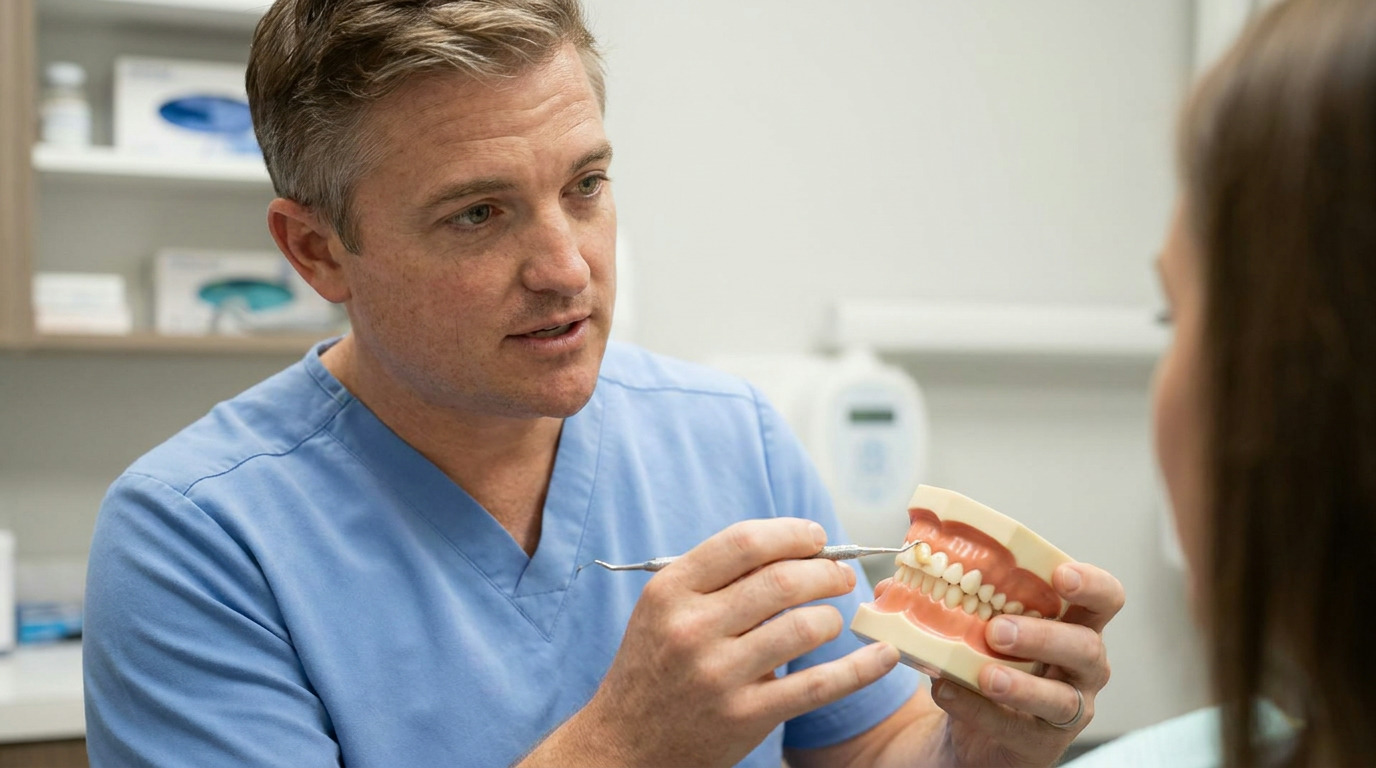
Dr. Taylor Schaar, wearing light blue scrubs, holds a dental model and a dental tool, pointing at the model while looking towards an unseen person in a clinic setting.

Signs You Might Need Bonding

Many subtle indicators suggest that dental bonding could be a beneficial treatment. Often, these signs involve minor cosmetic flaws or small structural issues that compromise a tooth's integrity. Dr. Taylor Schaar carefully assesses each patient's unique situation to determine if bonding is the right choice.

Allison's chip was a clear sign, but other issues also point to the need for this simple, effective procedure.

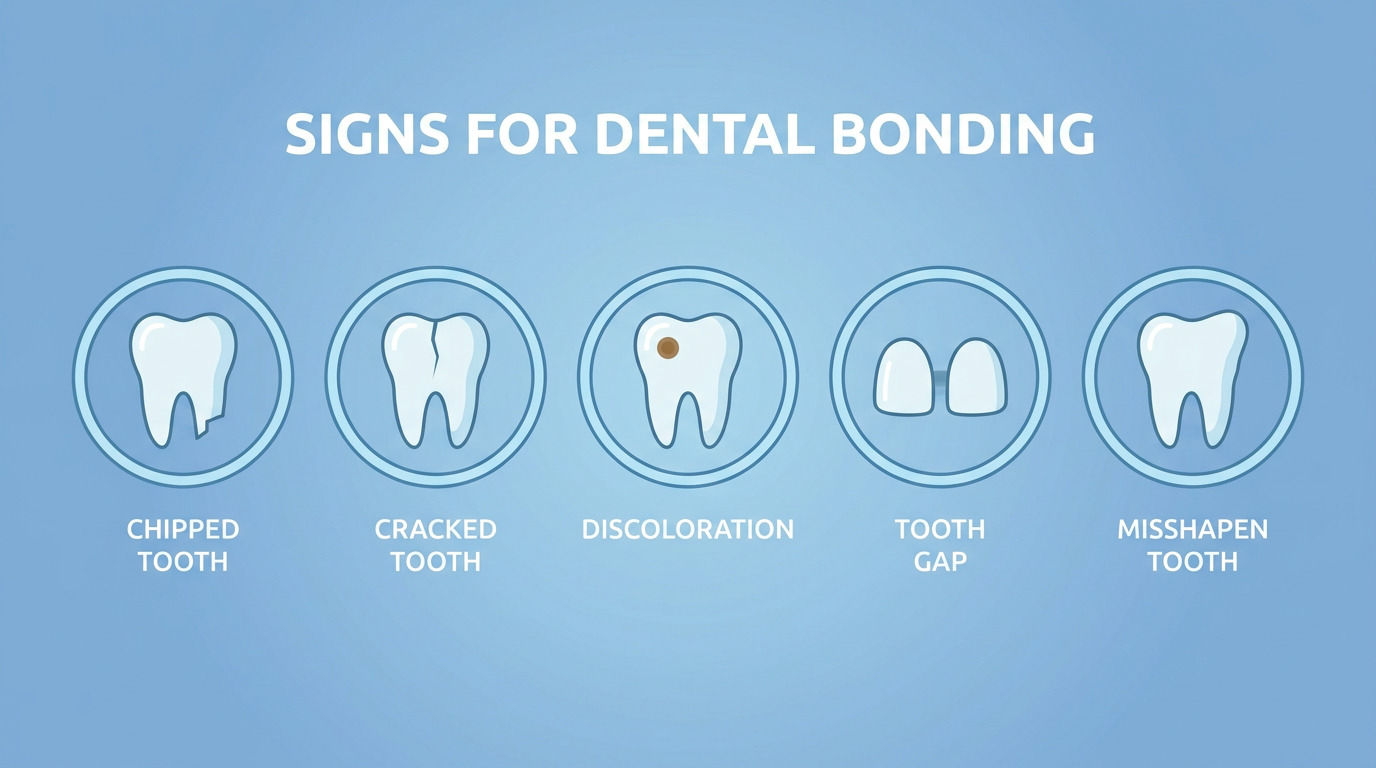
  • Chipped Teeth: Small chips or fractures, often from biting something hard, can be easily repaired with bonding.
  • Cracked Teeth: Minor cracks that don't involve the tooth's pulp can be sealed and strengthened.
  • Discolored Areas: Stubborn stains or areas of discoloration that don't respond to whitening can be masked.
  • Gaps Between Teeth: Small spaces between teeth can be aesthetically closed, creating a more uniform smile.
  • Exposed Roots: Recession can expose roots, making them sensitive, and bonding offers protective coverage.
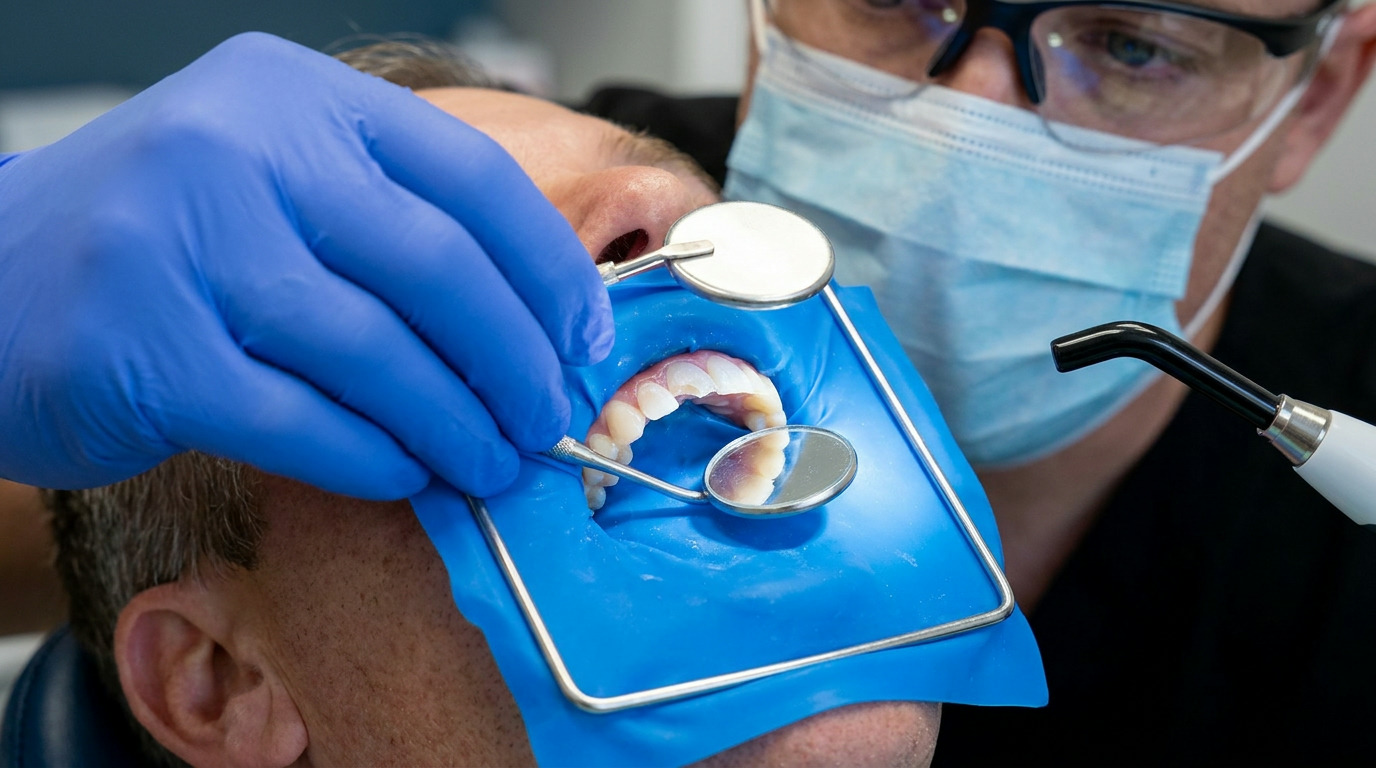
A dentist in glasses and a face mask holds a light curing tool near a patient's mouth, which is open with a blue dental dam and two dental mirrors reflecting the teeth.

Addressing Chipped or Cracked Teeth

Chipped or cracked teeth are among the most common reasons patients consider dental bonding. Even a small chip, like the one Allison had, can be noticeable and create rough edges that irritate the tongue. Dr. Taylor Schaar uses bonding to seamlessly repair these imperfections, restoring the tooth's original form and protecting it from further damage.

He explains that bonding helps prevent minor damage from escalating into more significant dental problems.

The composite resin used in bonding acts like a protective layer, sealing off the compromised area. This not only improves the tooth's appearance but also helps maintain its structural integrity. Allison felt reassured knowing her small chip could be addressed with a minimally invasive procedure. Dr. Schaar emphasizes that early intervention is key when dealing with any type of tooth damage.

Infographic with the title "SIGNS FOR DENTAL BONDING" above five circular icons, each depicting a tooth condition: a chipped tooth, a cracked tooth, a tooth with discoloration, two teeth with a gap, and a misshapen tooth.

Schedule Your Consultation Today

If you're noticing any signs that suggest you might benefit from dental bonding, or if you simply have questions about improving your smile, the team at Schaar Dental Wellness is ready to help. Dr. Taylor Schaar and his compassionate staff are dedicated to providing personalized care and finding the best solutions for your oral health needs. Contact Schaar Dental Wellness today to schedule a consultation and explore how dental bonding or other cosmetic options can enhance your smile.

Fixing Gaps and Discoloration

Beyond repairs, dental bonding excels at addressing aesthetic concerns such as small gaps between teeth and persistent discoloration. For patients who desire a more uniform smile without extensive orthodontic work, bonding can be an ideal solution. Dr. Taylor Schaar often uses bonding to achieve quick, noticeable improvements in a single appointment.

Allison, another patient of Dr. Schaar's, had a noticeable gap between her two front teeth that always made her self-conscious.

  • Closing Diastemas: Bonding can effectively reduce or eliminate small gaps, creating a more cohesive smile.
  • Masking Stains: Dark spots or areas of intrinsic discoloration can be covered with the tooth-colored resin.
  • Reshaping Irregular Teeth: Teeth that are too short, uneven, or oddly shaped can be subtly reshaped.
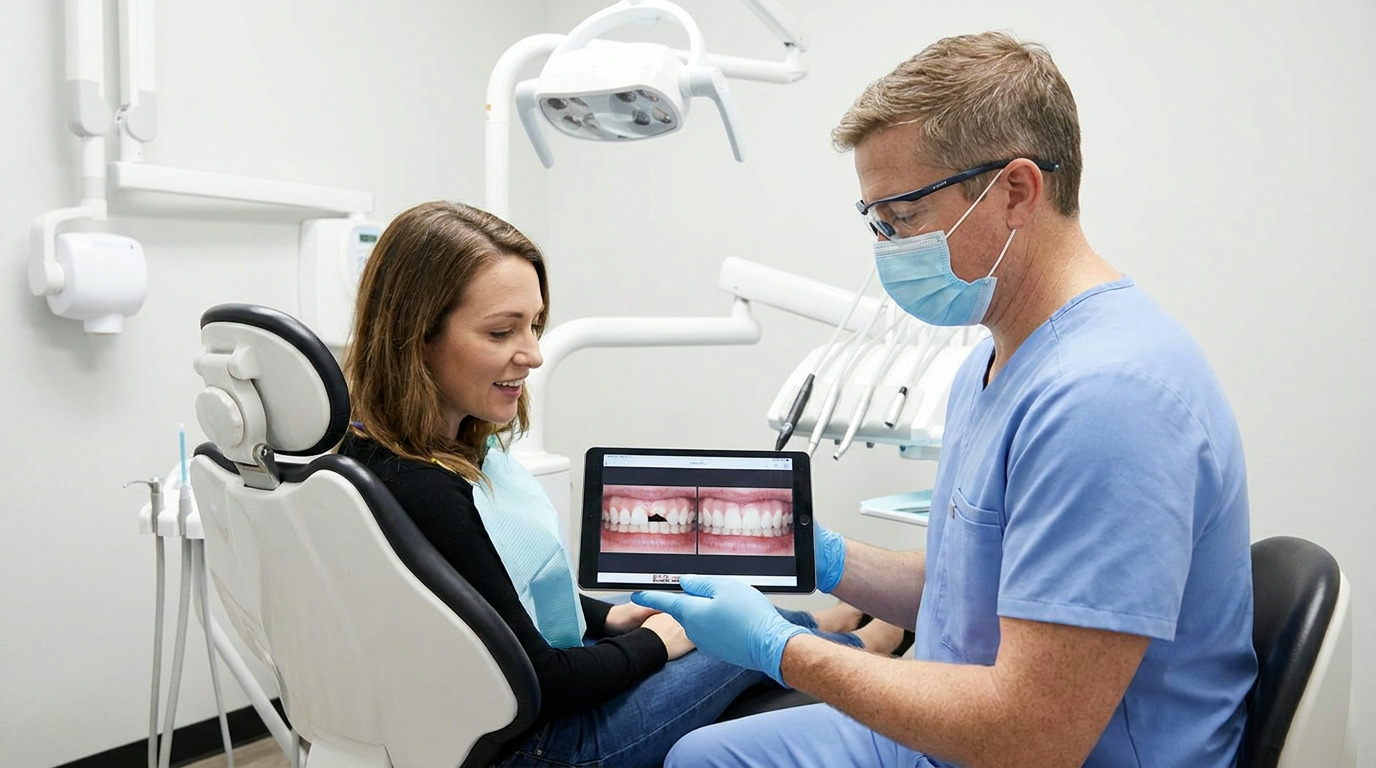
Dr. Taylor Schaar, wearing blue scrubs, a mask, and glasses, shows Allison, seated in a dental chair, a tablet displaying a before-and-after image of teeth.

When Bonding Is the Best Choice

Dental bonding is an excellent option for minor cosmetic enhancements and repairs that do not require significant structural changes to the tooth. It is often preferred for its conservative nature, as it typically involves removing very little, if any, tooth enamel. Dr. Taylor Schaar frequently recommends bonding for issues like small chips, minor gaps, or areas of discoloration where a quick, cost-effective solution is desired.

For Allison, whose chip was relatively small, bonding offered a perfect balance of effectiveness and simplicity. Dr. Schaar carefully explains that while bonding is highly versatile, more extensive damage or aesthetic goals might call for other Cosmetic Dentistry options, such as veneers or crowns. He always ensures patients understand all their available choices.

Megan smiles, looking out a cafe window, with a latte on the wooden table beside her, and other blurred patrons in the background.

Dental Bonding vs. Other Options

While dental bonding is incredibly versatile, it's essential to understand how it compares to other dental treatments like veneers or crowns. Bonding is generally less invasive and often more affordable, making it a great first step for many patients. Dr. Taylor Schaar guides patients through these comparisons, helping them select the most appropriate treatment for their individual needs and goals.

Allison appreciated learning about her options.

  • Veneers: Offer more dramatic and permanent aesthetic changes, but require more enamel removal.
  • Crowns: Used for significant damage, extensive decay, or after a root canal, providing full coverage and strength.
  • Orthodontics: Address significant bite issues and large gaps, taking longer but offering comprehensive alignment.

Dr. Schaar emphasizes that each treatment has its ideal application. Bonding is a fantastic choice for minor to moderate cosmetic improvements and repairs. Another patient chose bonding for a small chip instead of a veneer because she wanted a faster, less invasive fix.

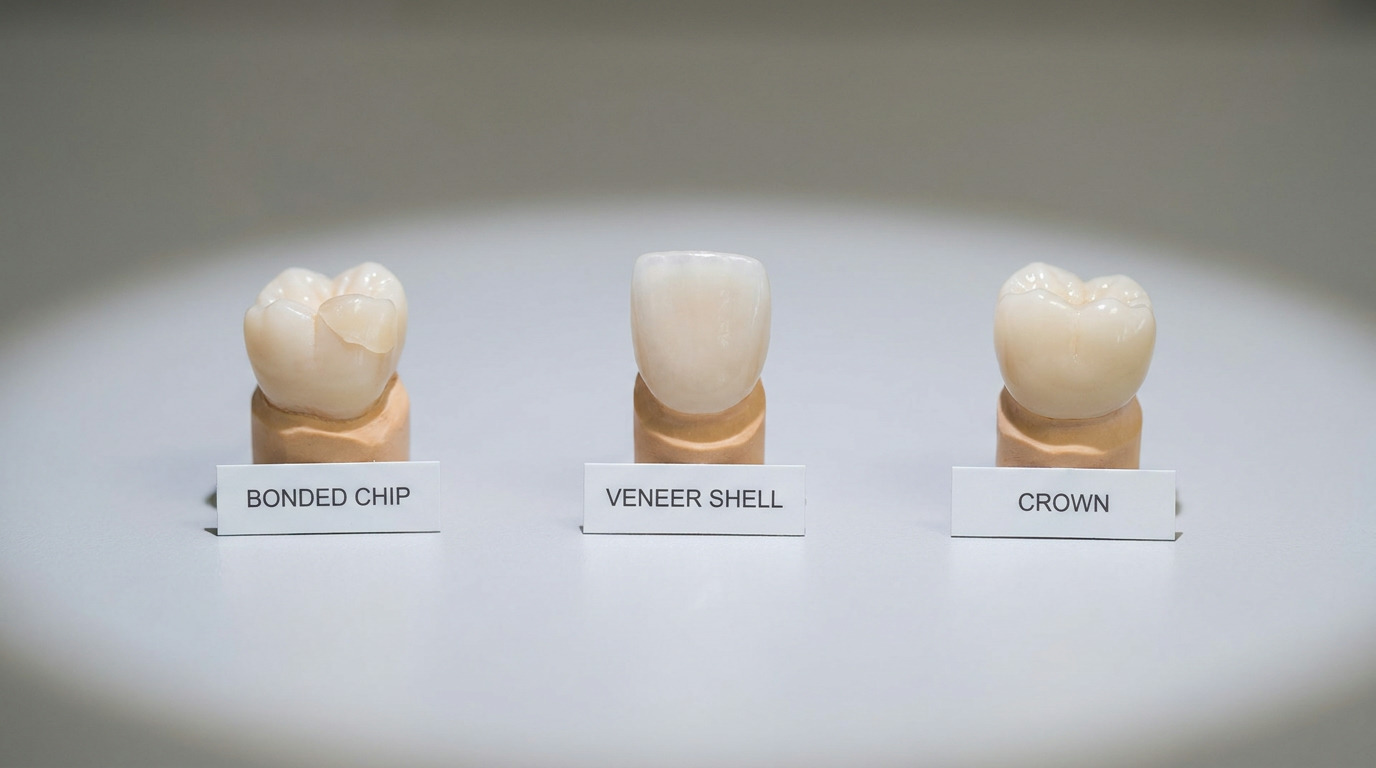
Three dental models, labeled "BONDED CHIP," "VENEER SHELL," and "CROWN," are displayed on a light gray surface, each on a small wooden base.

Maintaining Your Bonded Smile

Once dental bonding is complete, maintaining the results requires consistent oral hygiene and some mindful habits. The composite resin used in bonding is durable, but it can stain over time and is not as strong as natural tooth enamel.

Dr. Taylor Schaar advises patients to brush twice daily, floss once a day, and attend regular Dental Cleanings at Schaar Dental Wellness.

He also recommends avoiding habits like biting on hard objects, chewing ice, or using teeth to open packages, which could chip the bonded material. Regular check-ups allow Dr. Schaar to inspect the bonding and ensure its longevity. Following these simple steps can significantly extend the life of dental bonding.

Allison returned for her follow-up appointment, marveling at how natural and seamless her repaired tooth looked. She had been diligent with her home care and felt confident in her decision. Her initial concern had transformed into renewed confidence, thanks to Dr. Taylor Schaar's expert care and the straightforward solution that dental bonding provided for her.

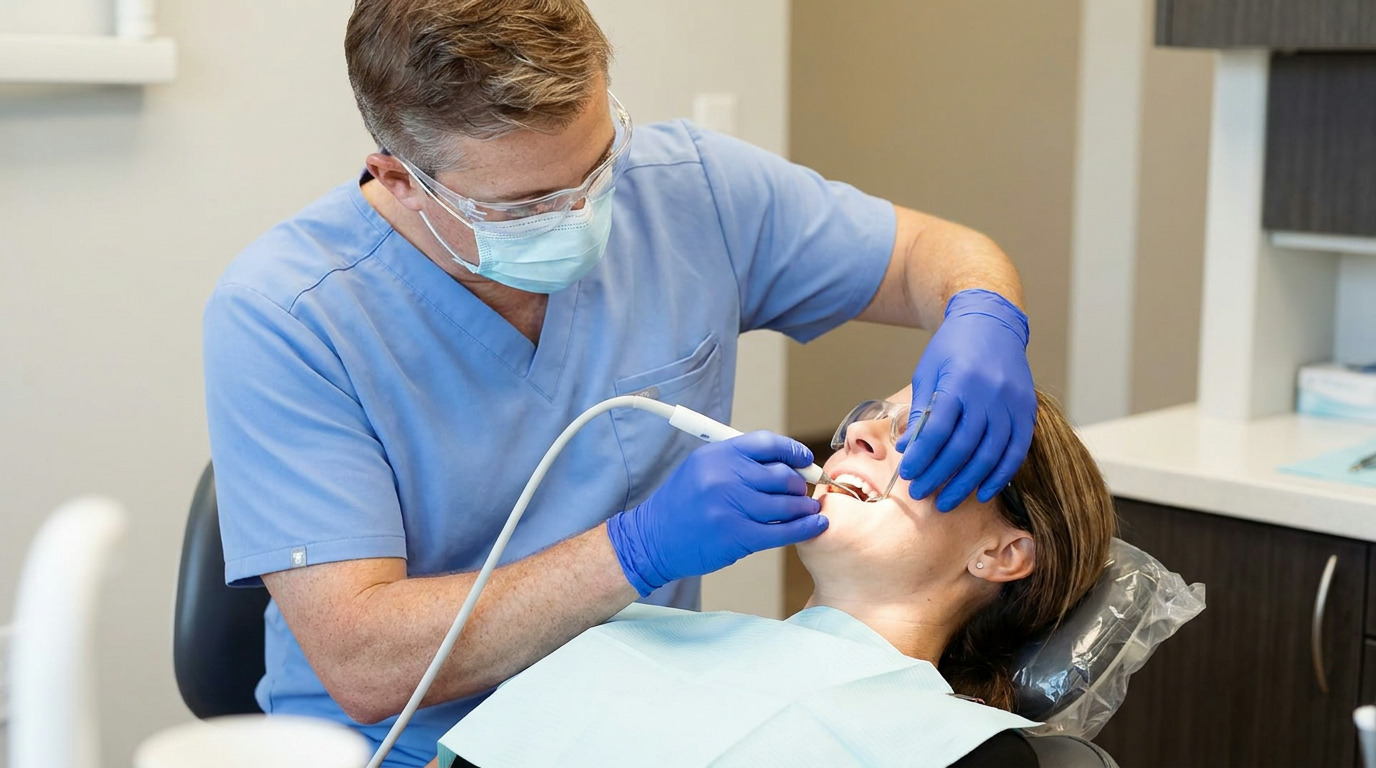
A dentist in blue scrubs, mask, and safety glasses uses an ultrasonic scaler on a patient's teeth, who is wearing safety glasses and a light blue bib in a dental office.
Categories:

Frequently Asked Questions

1. What is dental bonding used for?
Dental bonding is used to repair chipped or cracked teeth, close small gaps between teeth, cover discolored spots, and reshape teeth for a more uniform appearance. Dr. Taylor Schaar often recommends it for minor cosmetic and structural corrections.

2. How long does dental bonding last?
With proper care and good oral hygiene, dental bonding can typically last between 5 to 10 years. Its longevity depends on factors like your biting habits and how well you maintain your oral health, according to Dr. Taylor Schaar.

3. Is dental bonding a painful procedure?
No, dental bonding is generally not painful. Most patients do not require anesthesia unless the bonding is being used to fill a decayed tooth. Dr. Taylor Schaar ensures patient comfort throughout the entire process.

4. How do I care for bonded teeth?
To care for bonded teeth, Dr. Taylor Schaar advises brushing twice daily, flossing once a day, and avoiding biting on hard objects like ice or hard candies. Regular dental check-ups are also crucial to maintain the bonding.

5. Can bonded teeth be whitened?
The composite resin used in dental bonding does not respond to teeth whitening treatments. If you are considering KöR® Teeth Whitening or Zoom!® Teeth Whitening, Dr. Taylor Schaar recommends doing so before your bonding procedure so the resin can be matched to your new, brighter shade.

6. What is the process of getting dental bonding?
The dental bonding process typically involves Dr. Taylor Schaar preparing the tooth surface, applying a conditioning liquid, and then applying and molding the tooth-colored composite resin. He then hardens the resin with a special light and finally polishes it for a natural look.


BOOK An APPOINTMENT

Schedule Your Visit

Care That Feels Personal

Great dentistry is about more than teeth. It is about comfort, trust, and helping every patient feel confident about their smile.

OFFICE LOCATION
2506 E Mockingbird Ln, Victoria, TX 77904
OFFICE HOURS

Monday - Thursday: 08:00AM - 05:00PM

Friday - Sunday: Closed

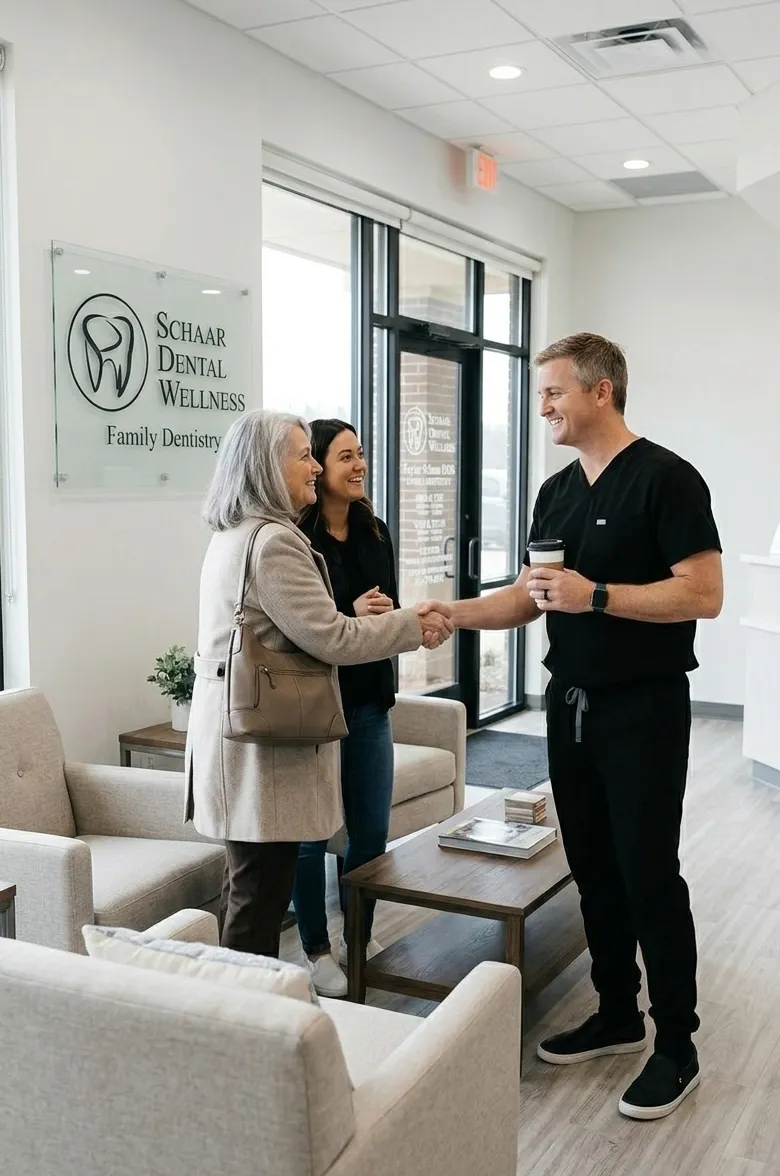
Dr. Schaar welcoming two patients to his office.
Request an Appointment

Thank you for booking your appointment!

We’ve received your request and will contact you soon to confirm the details. We look forward to seeing you at Schaar Dental Wellness!

Oops! Something went wrong while submitting the form.