
Implant-Supported Bridges in Victoria, TX
Replace several missing teeth with a fixed bridge anchored by dental implants for reliable, everyday function.
What are Implant-Supported Bridges?
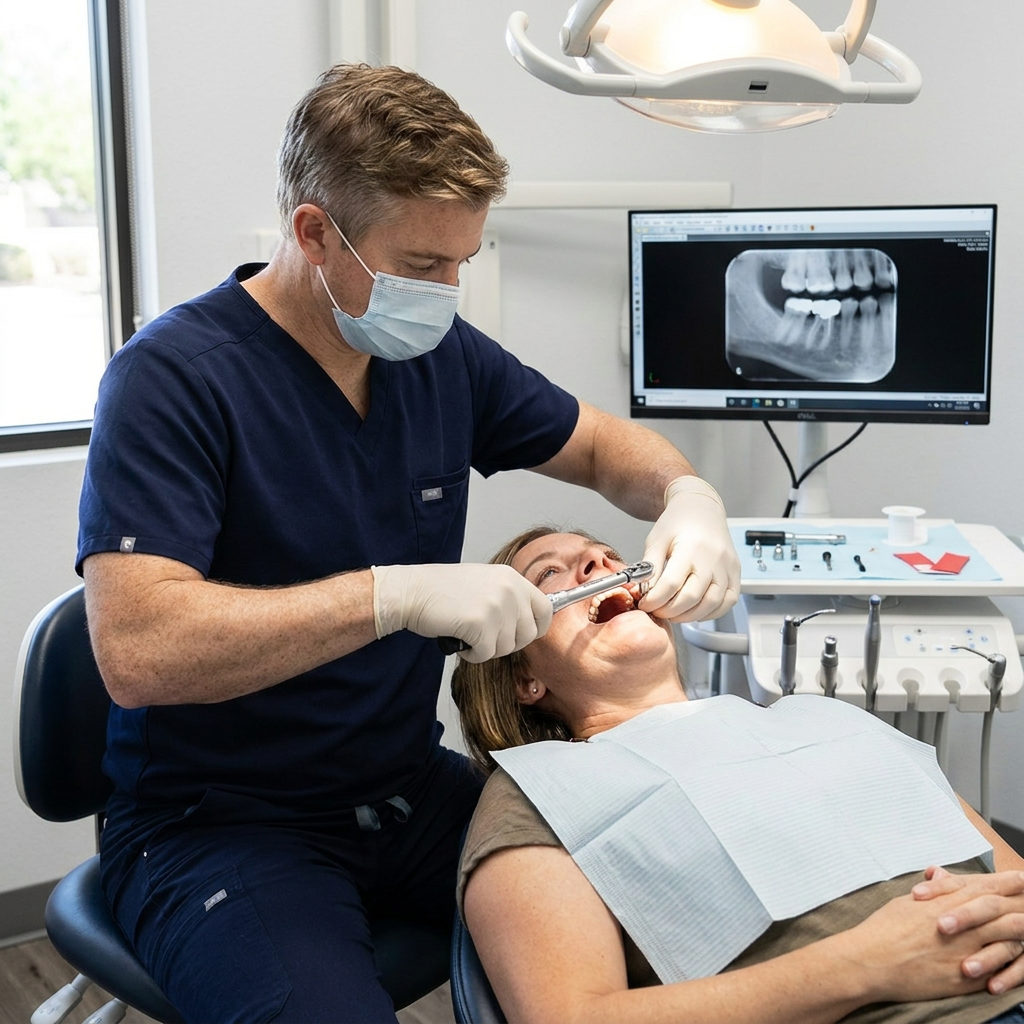
Implant-supported bridges replace several missing teeth in a row without relying on the teeth next to the gap. Instead of grinding down healthy neighbors to anchor a traditional bridge, we place two or more small titanium posts directly into the jawbone. Those posts act as roots, and a custom bridge locks onto them. The result feels stable when you chew and stays put when you talk.
Because the posts fuse with bone over a few months, an implant-supported bridge actually helps preserve your jaw structure. Traditional options can allow the bone underneath to shrink over time, which changes your facial profile. At Schaar Dental Wellness in Victoria, TX, we see patients choose this route specifically because it protects what's already there while filling in what's missing.
Benefits of Implant-Supported Bridges
An implant-supported bridge does more than fill a gap. It gives you back the bite strength and confidence that missing teeth took away.

Chew Without Worry
Implants anchor your bridge directly into the jawbone, so it stays put when you bite into firm foods. No shifting, no slipping, no holding back at meals.

Nearby Teeth Stay Safe
A traditional bridge reshapes healthy teeth on either side. Implant-supported bridges skip that step entirely, leaving surrounding teeth untouched.

Bone Stays Healthy
When teeth are missing, the jawbone beneath them gradually shrinks. Implant posts stimulate that bone the same way natural roots do, helping preserve your facial structure for years.
Who Benefits from Implant-Supported Bridges?
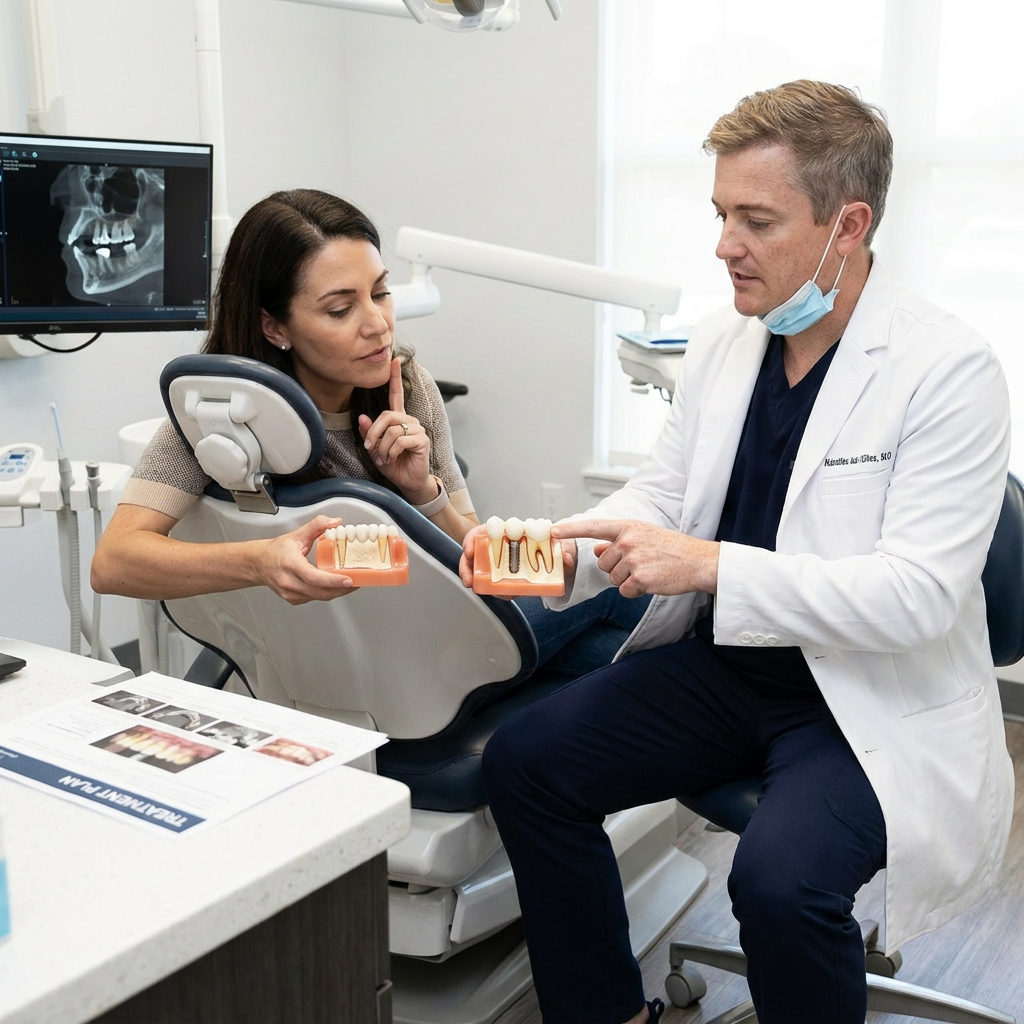
If you've lost several teeth in a row and a traditional bridge or partial denture feels loose or uncomfortable, an implant-supported bridge may be exactly what you need. Adults who have lived with gaps for years often notice their remaining teeth shifting, their bite changing, or their jawbone slowly shrinking. These are signs that the area needs stable, root-level support rather than a restoration that simply sits on top of the gums.
You don't need an implant for every missing tooth. We place two or more dental implants in the jawbone, then attach a fixed bridge that spans the full gap. This approach works well for patients who are missing three or more teeth in a section but still have healthy bone to anchor into. Our team at Schaar Dental Wellness evaluates bone density and gum health during your initial visit so we can confirm the right path forward.
Advanced Implant-Supported Bridges Technology
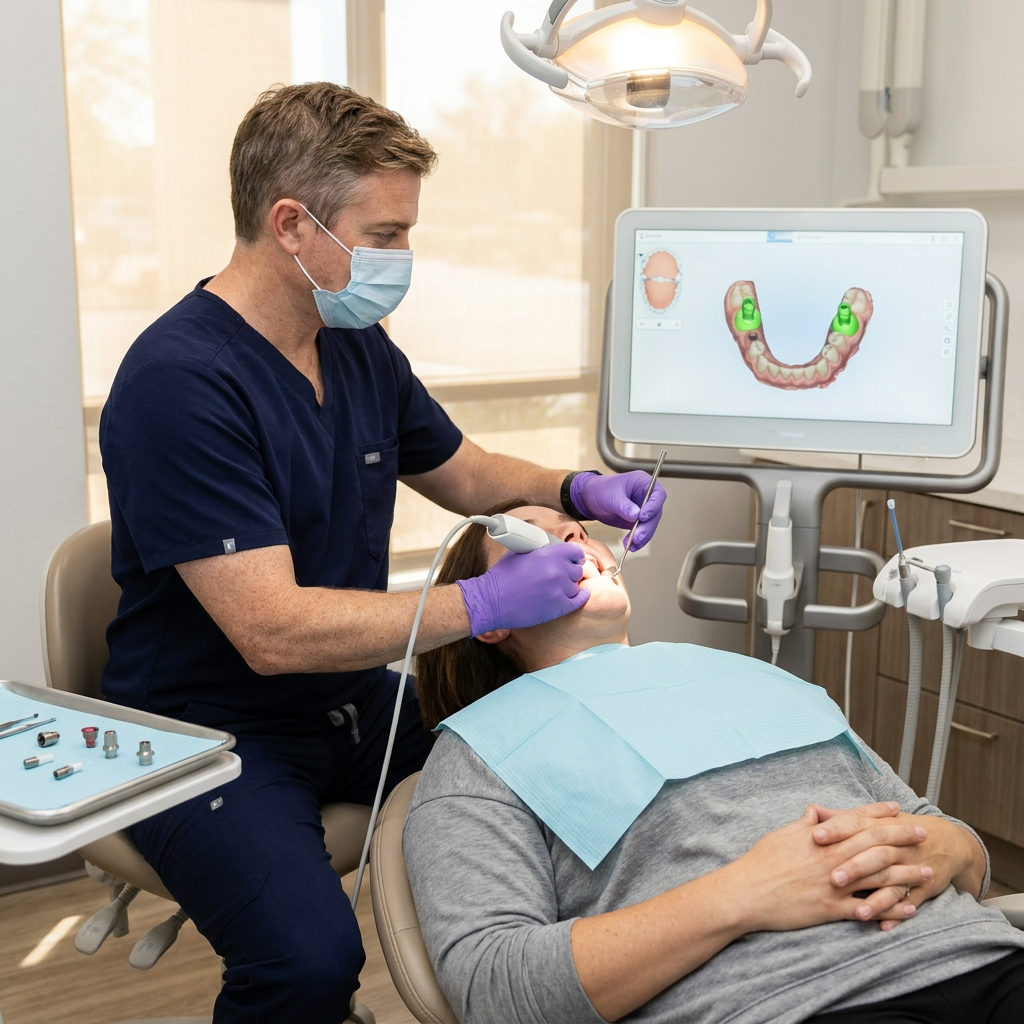
We plan every implant-supported bridge case using cone beam 3D imaging, which gives us a full view of bone density, nerve paths, and sinus position before we make a single incision. That scan lets us map the exact angle and depth for each post, so placement is precise down to fractions of a millimeter. Guided surgical templates printed from the scan data mean less guesswork and smaller incisions during the procedure.
The bridge itself is milled from zirconia, a material roughly five times stronger than traditional porcelain. Zirconia resists chipping under heavy bite force and can be shade-matched to blend with your surrounding teeth. Digital design software lets us adjust the shape of each tooth in the bridge individually, so the final piece follows your natural bite pattern instead of forcing you to adapt to something generic.
Your Dental Visit Explained
We start by placing the implants that will anchor your bridge. You receive local anesthesia (and sedation if you prefer), so the procedure feels like steady pressure rather than anything sharp. We position each implant precisely using digital guides, then attach a temporary bridge so you leave with a full set of teeth that same day. Most visits run two to four hours depending on how many implants you need.
Some swelling and tenderness are normal for the first few days, and soft foods keep things comfortable during that stretch. The implants fuse with your jawbone over roughly three to six months. We schedule check-ins at our Victoria, TX office to track healing, and once everything has integrated fully, we place your permanent bridge for a secure, lasting fit.
Before Your Appointment
- Bring a list of every medication you take, including supplements, since some can affect healing around implant sites.
- Eat a solid meal two hours before your appointment because the consultation and imaging for implant-supported bridges can run long.
- Wear a shirt with a loose collar so the x-ray sensor and any scanning equipment sit comfortably around your jaw and neck.
After Your Appointment
- Rinse gently around the bridge with warm salt water two to three times a day for the first week to keep the implant sites clean.
- Hold off on hard or crunchy foods like nuts, raw carrots, and crusty bread for at least two weeks while the implant sites heal underneath the bridge.
- Brush carefully around the abutment posts with a soft-bristle brush starting the day after placement, and begin threading floss under the pontics once swelling fades.

Frequently Asked Questions
We’ve answered the most frequently asked questions to help you feel informed, prepared, and confident before your appointment.
How long do implant-supported bridges typically last?
+Most implant-supported bridges last 15 years or longer. The implants themselves can last a lifetime with good oral hygiene. The bridge portion may need replacement after 15 to 20 years depending on wear and bite forces.
Can I eat steak and crunchy foods with an implant-supported bridge?
+Yes. Once fully healed, you can bite into apples, chew steak, and eat raw vegetables without worry. The implants anchor directly into bone, so your bite force is close to what natural teeth provide.
How is an implant-supported bridge different from a traditional bridge?
+A traditional bridge relies on neighboring teeth filed down to act as anchors. An implant-supported bridge sits on implants placed in the jawbone, so healthy teeth nearby stay untouched and intact.
Do implant-supported bridges prevent bone loss in the jaw?
+They do. The implants stimulate the jawbone the same way natural tooth roots do, which helps maintain bone density over time. A traditional bridge or partial denture does not offer that benefit.
How often do I need checkups after getting an implant-supported bridge?
+We recommend visits every six months so we can check the implants, gums, and bridge for any signs of wear. These appointments are similar to a standard cleaning and usually take about an hour.
Schedule Your Visit


Thank you for booking your appointment!
We’ve received your request and will contact you soon to confirm the details. We look forward to seeing you at Schaar Dental Wellness!
Stay Informed with Expert Insights & Tips About Implant-Supported Bridges

We’re working on new articles to help you care for your smile. Check back soon for updates from Schaar Dental Wellness..
View More Blogs