
Periodontal Treatment in Victoria, TX
Treat gum disease and restore healthy tissue so your teeth stay strong and well-supported for years to come.
What is Periodontal Treatment?
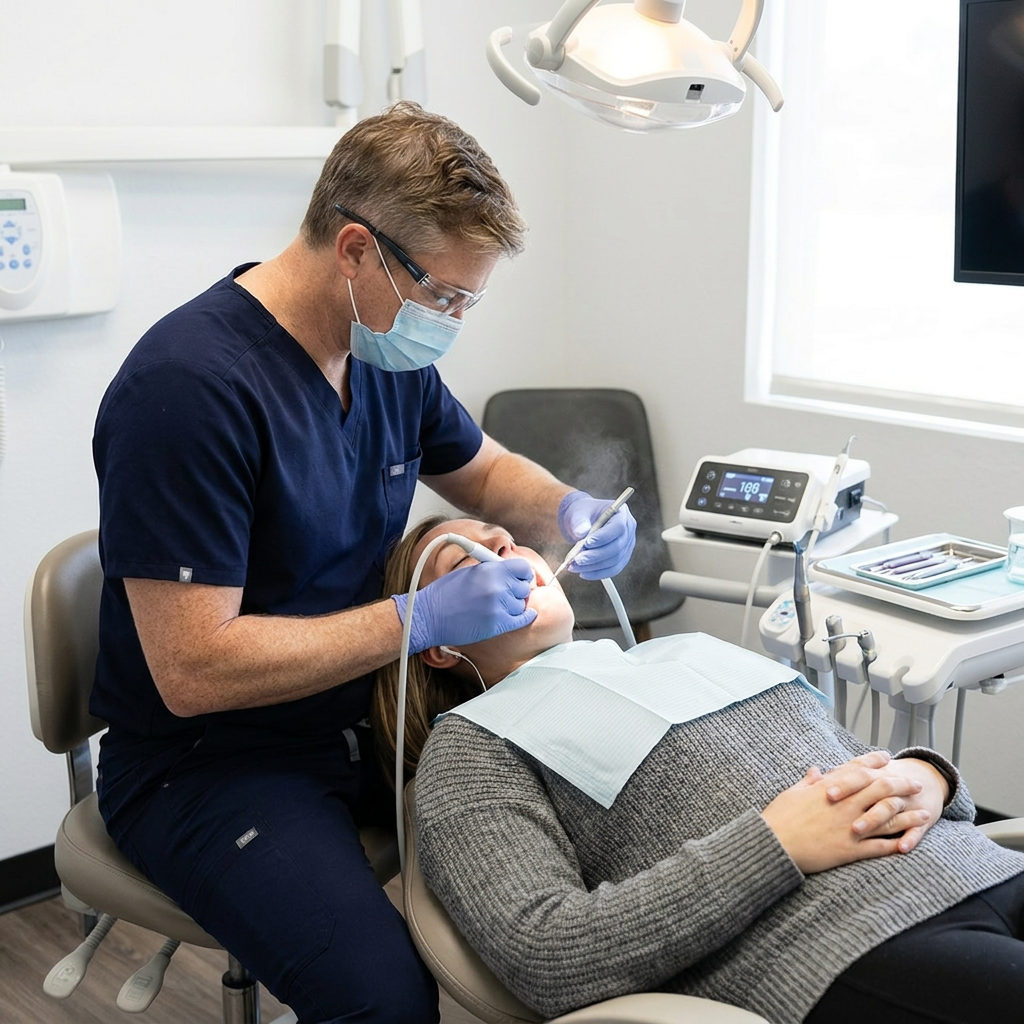
Bleeding when you brush, gums that feel tender or look swollen, a bad taste that won't go away. These are signs that bacteria have moved below the gumline and started damaging the tissue that holds your teeth in place. Periodontal treatment targets that hidden infection before it spreads to the bone. We remove hardened buildup from root surfaces and flush out bacterial pockets so your gums can reattach and heal.
The process usually starts with a deeper cleaning called scaling and root planing. If pockets are too deep for that alone, we may place localized antibiotics or recommend a minor surgical approach. Catching gum disease early, often during a routine exam and x-rays, makes treatment simpler and recovery faster. Most patients in Victoria, TX notice firmer, healthier gums within a few weeks.
Benefits of Periodontal Treatment
Periodontal treatment targets the infection at its source, giving your gums a real chance to heal and reattach to your teeth.

Less Bleeding at Home
Swollen, bleeding gums are often the first sign of trouble. After treatment, most patients notice the bleeding stops within a few weeks as the tissue firms up and inflammation drops.

Keep Your Real Teeth
Gum disease is the leading cause of tooth loss in adults. Treating it early stabilizes the bone around each root so your teeth stay anchored where they belong.

Fresher Breath Daily
Persistent bad breath often comes from bacteria trapped in deep gum pockets. Clearing out that buildup removes the source, not just the smell, so the improvement sticks.
Who Needs Periodontal Treatment?
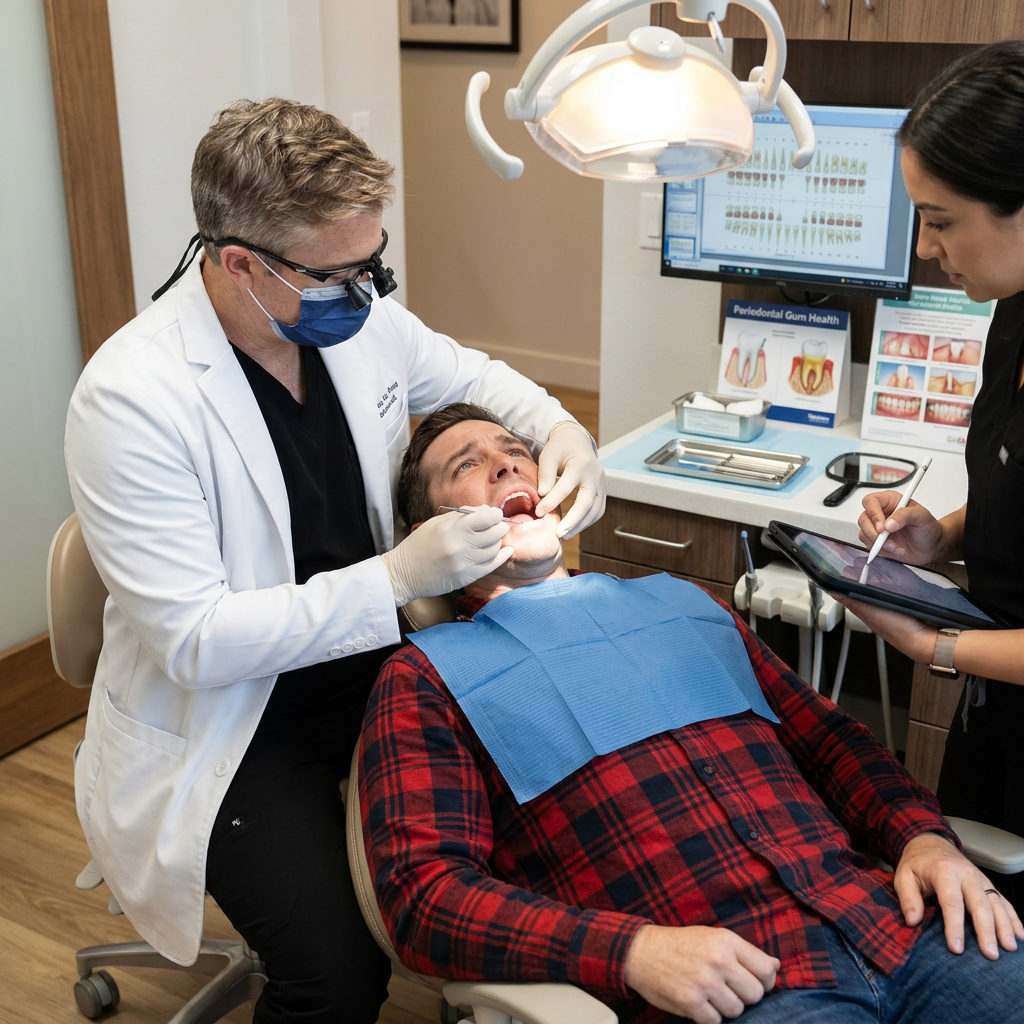
Bleeding when you brush or floss is easy to dismiss, but it is one of the earliest signs that your gums need attention. So is persistent bad breath that mouthwash only masks for an hour. If your gums look red or puffy, or if you notice them pulling away from your teeth, periodontal treatment can stop the damage before it spreads to the bone underneath.
Gum disease does not skip age groups. Adults in their thirties catch it just as often as patients in their sixties, especially if it has been a while since a professional cleaning. Smokers, people managing diabetes, and anyone with a family history of gum problems tend to be more vulnerable. A dental exam at our Victoria, TX office can tell us exactly where things stand and what level of care your gums actually need.
Advanced Periodontal Treatment Technology
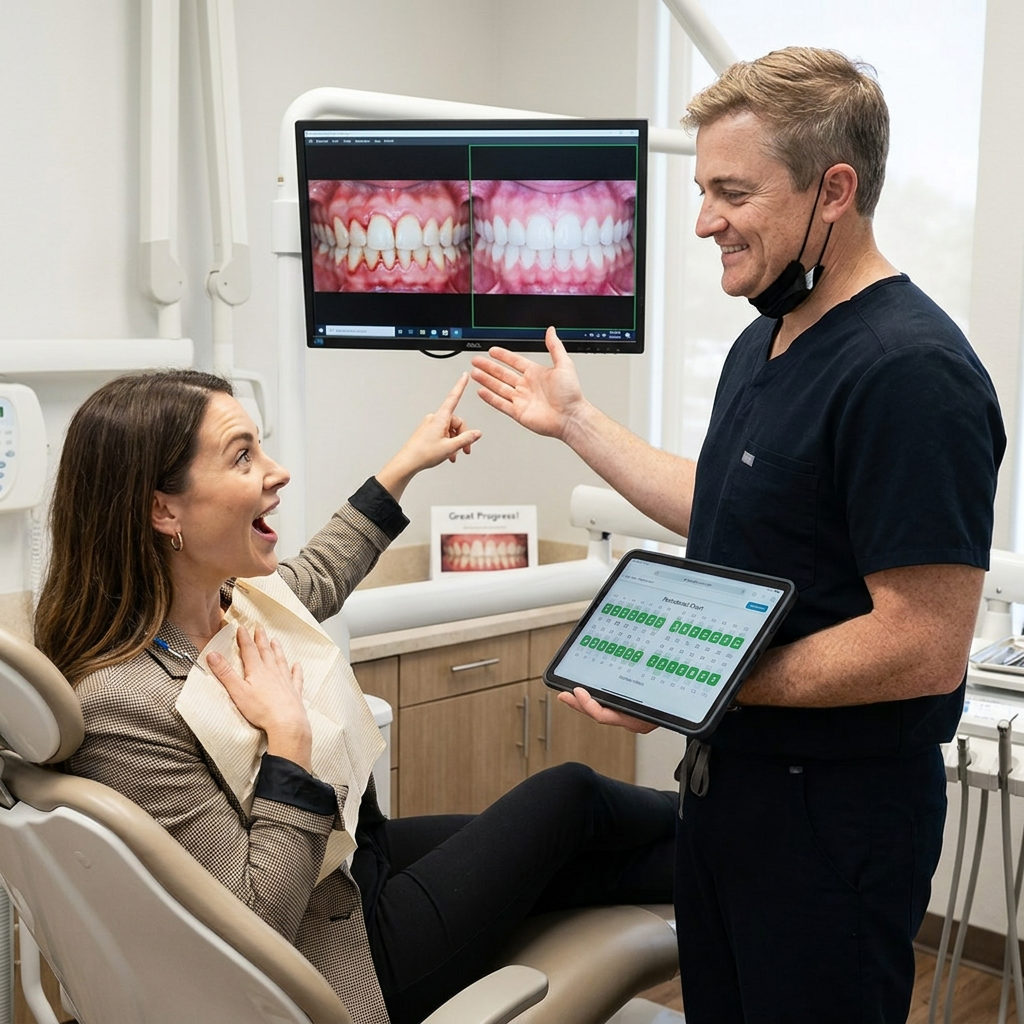
Ultrasonic scalers do much of the heavy lifting now. These instruments vibrate at thousands of cycles per second, breaking apart calculus deposits that hand instruments alone would take much longer to clear. The water spray flushes debris out of pockets in real time, and most patients find the sensation far more comfortable than traditional scraping. We also use magnification loupes that let us see pocket depths and root surfaces with detail the naked eye would miss.
Digital x-rays give us a clear picture of bone levels around each tooth while exposing you to roughly 80 percent less radiation than older film. We can compare images side by side over time, tracking exactly how bone responds to treatment. For deeper infections, we sometimes apply a slow-release antimicrobial gel directly into the pocket, keeping medication right where it works best for days after your visit.
Your Dental Visit Explained
We start with a thorough look at your gums, checking pocket depths with a small probe and taking x-rays to see what's happening below the gumline. If you need scaling and root planing, we numb the area so you stay comfortable throughout. We then clean beneath the gumline, removing buildup from the root surfaces. Most visits run about 60 to 90 minutes, depending on how many areas we treat.
Your gums may feel tender for a day or two, and mild sensitivity to hot or cold is normal. Most patients are back to regular eating within 48 hours. We schedule a follow-up a few weeks later to measure how your gum tissue is responding and decide if any areas need additional attention.
Before Your Appointment
- Bring a list of every medication you take, including blood thinners, since these can affect gum tissue response during treatment.
- Eat a small meal about an hour beforehand so you're comfortable sitting through detailed gum measurements and scaling.
- Skip smoking for at least 24 hours before your visit, as tobacco restricts blood flow and can complicate periodontal care.
After Your Appointment
- Rinse gently with warm salt water two to three times a day for the first week to keep treated gum tissue clean.
- Switch to a soft-bristled toothbrush around the scaling sites and avoid flossing treated areas until soreness fades, usually three to five days.
- Hold off on crunchy or spicy foods for 48 hours, since your gums may feel tender where plaque and tartar were removed below the gumline.

Frequently Asked Questions
We’ve answered the most frequently asked questions to help you feel informed, prepared, and confident before your appointment.
How often do I need follow-up visits after periodontal treatment?
+Most patients return every three to four months for maintenance cleanings. We measure pocket depths at each visit and adjust the schedule based on how your gums respond over time.
Can periodontal treatment reverse bone loss in my jaw?
+Treatment stops further bone loss and gives gum tissue a chance to reattach. In some cases, we can rebuild lost bone with grafting, but results depend on how much has already been lost.
Is periodontal treatment safe during pregnancy?
+Yes. Hormonal changes during pregnancy can actually worsen gum inflammation, so treating active gum disease is important. We coordinate timing with your OB and avoid elective procedures during the first trimester.
Will I be able to eat normally after my gums heal?
+Once healing is complete, usually within a few weeks, most patients eat without any restrictions. Healthier gum tissue actually makes chewing more comfortable because it reduces sensitivity and bleeding.
How long do the results of periodontal treatment last?
+Results can last years when you keep up with maintenance cleanings and solid home care. Gum disease is chronic, so skipping follow-ups or inconsistent brushing and flossing can allow it to return.
Schedule Your Visit


Thank you for booking your appointment!
We’ve received your request and will contact you soon to confirm the details. We look forward to seeing you at Schaar Dental Wellness!
Stay Informed with Expert Insights & Tips About Periodontal Treatment

We’re working on new articles to help you care for your smile. Check back soon for updates from Schaar Dental Wellness..
View More Blogs